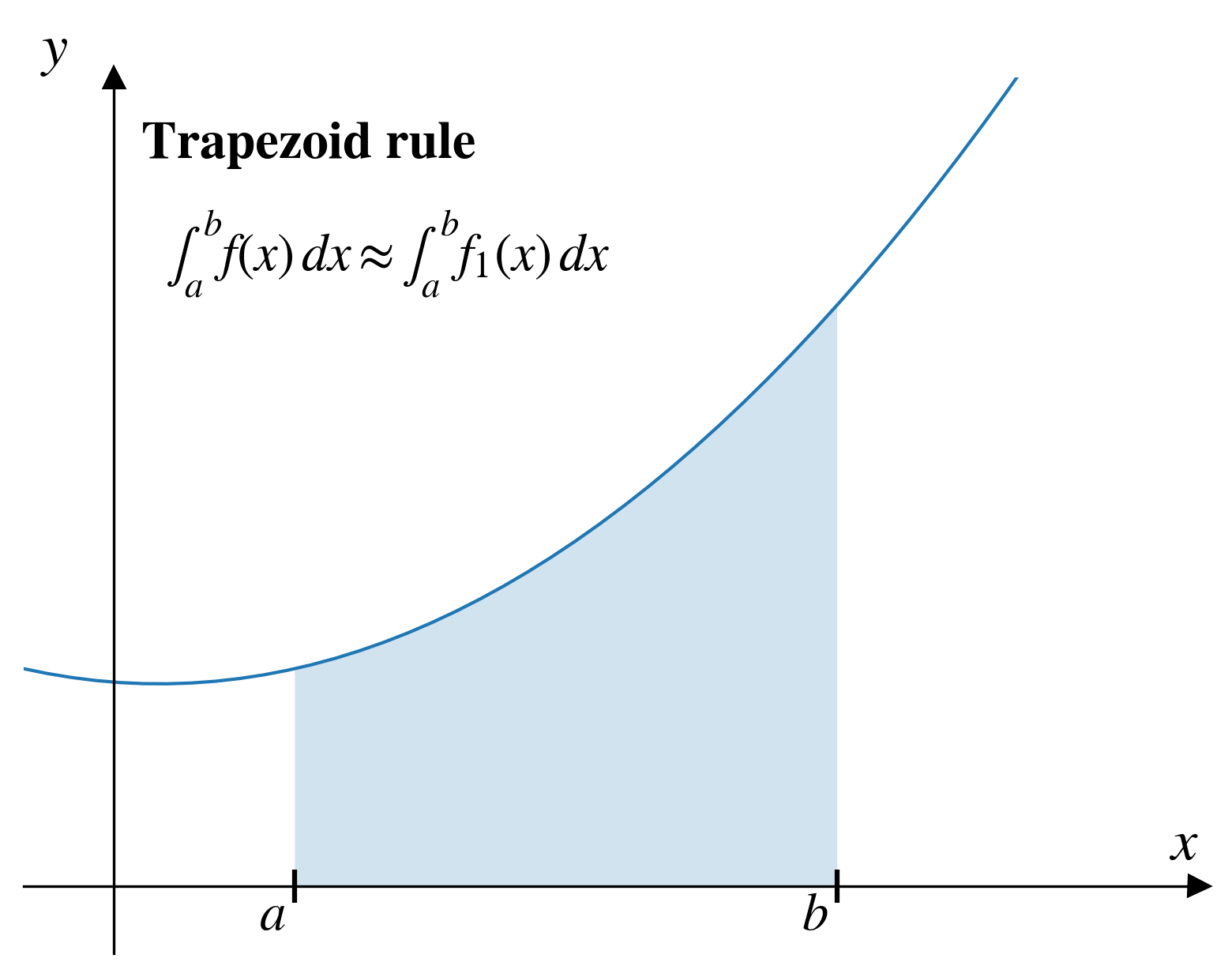
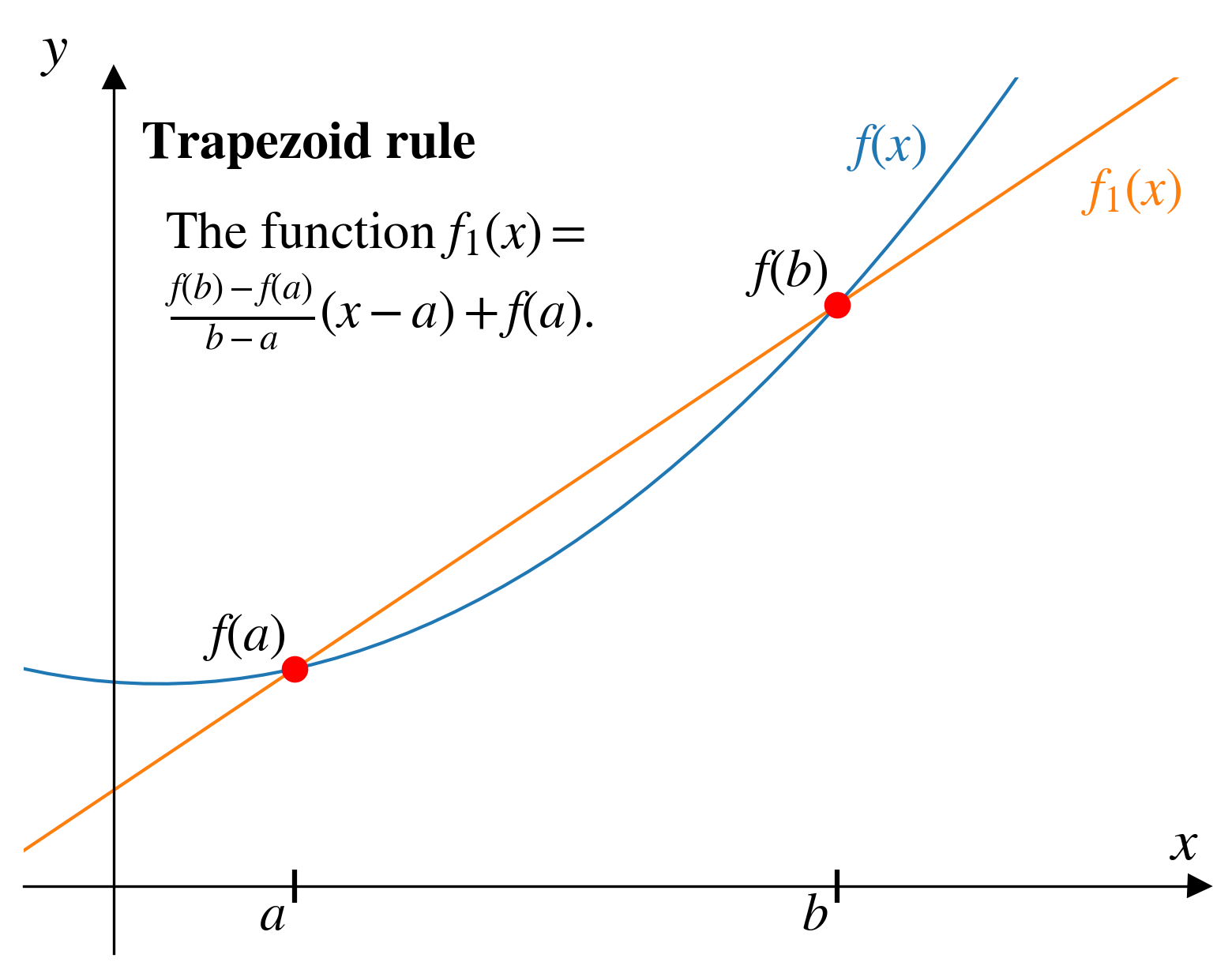
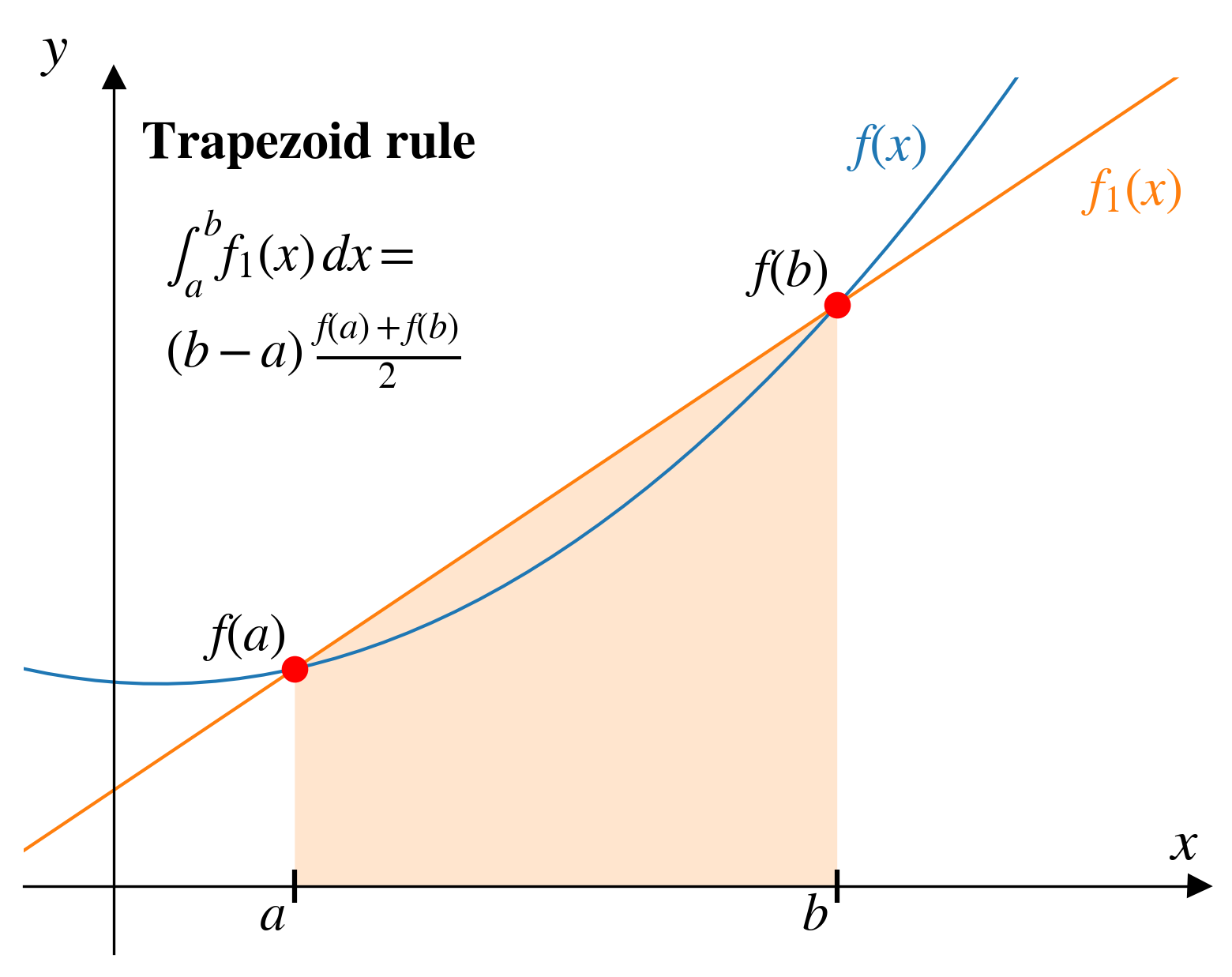
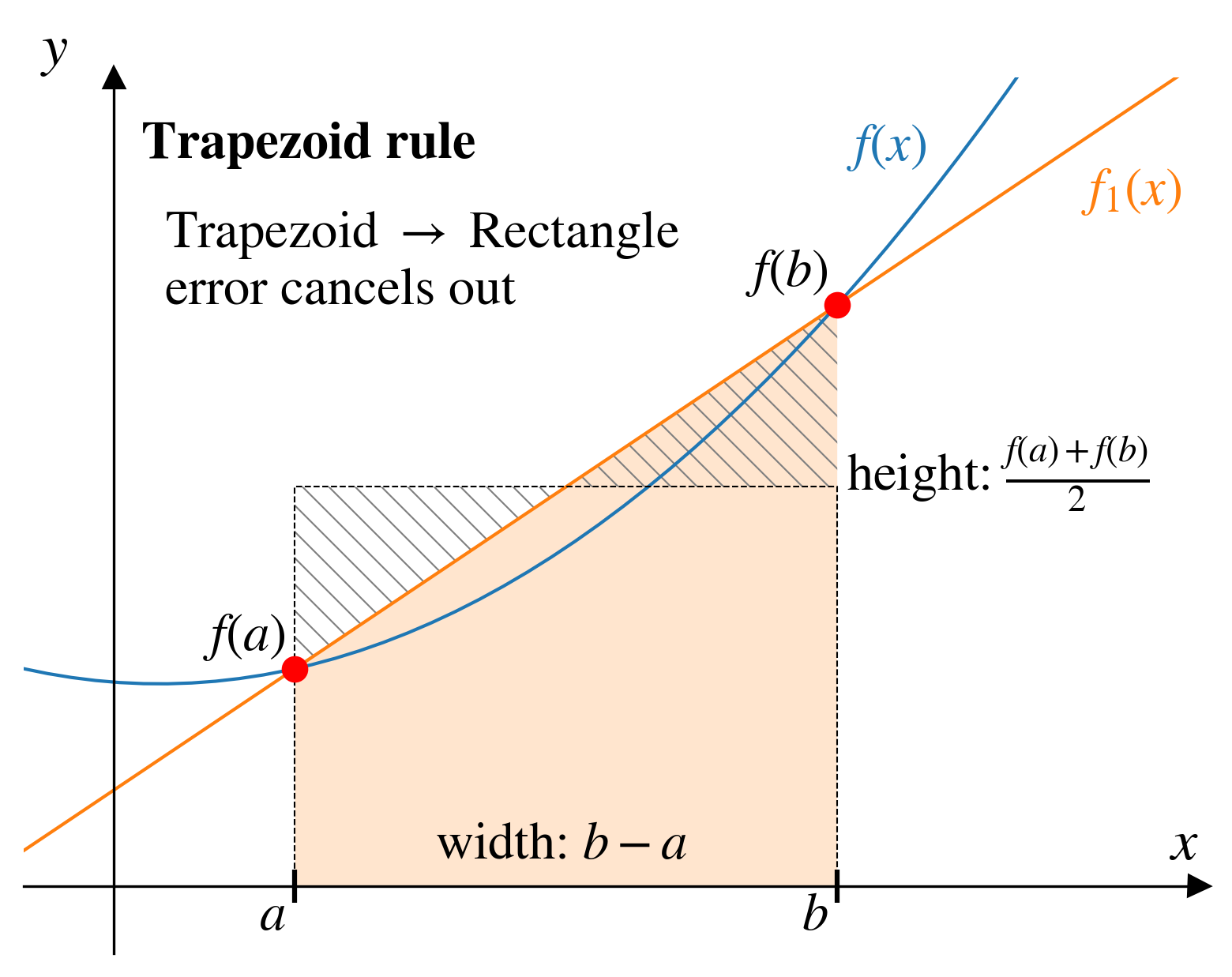
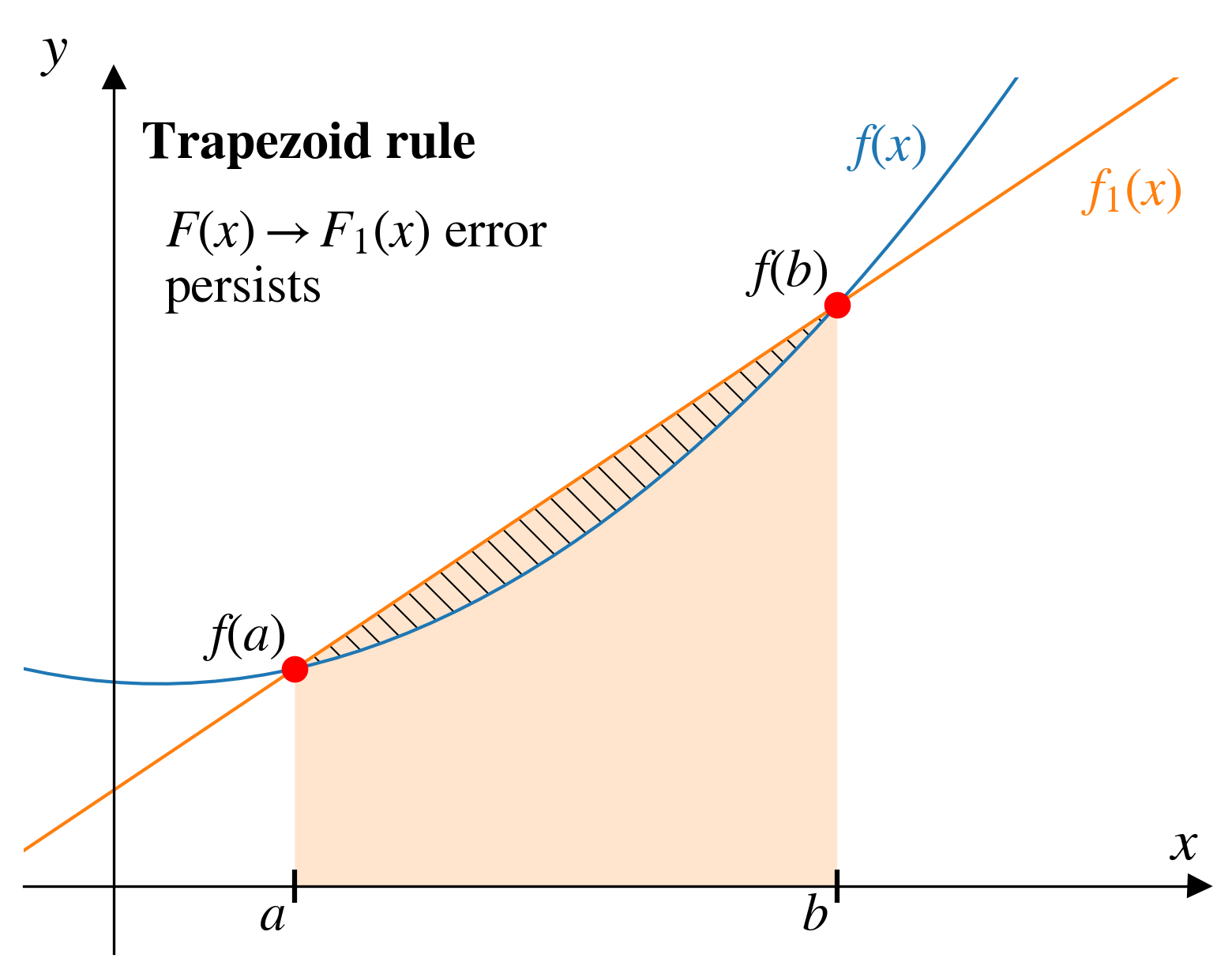
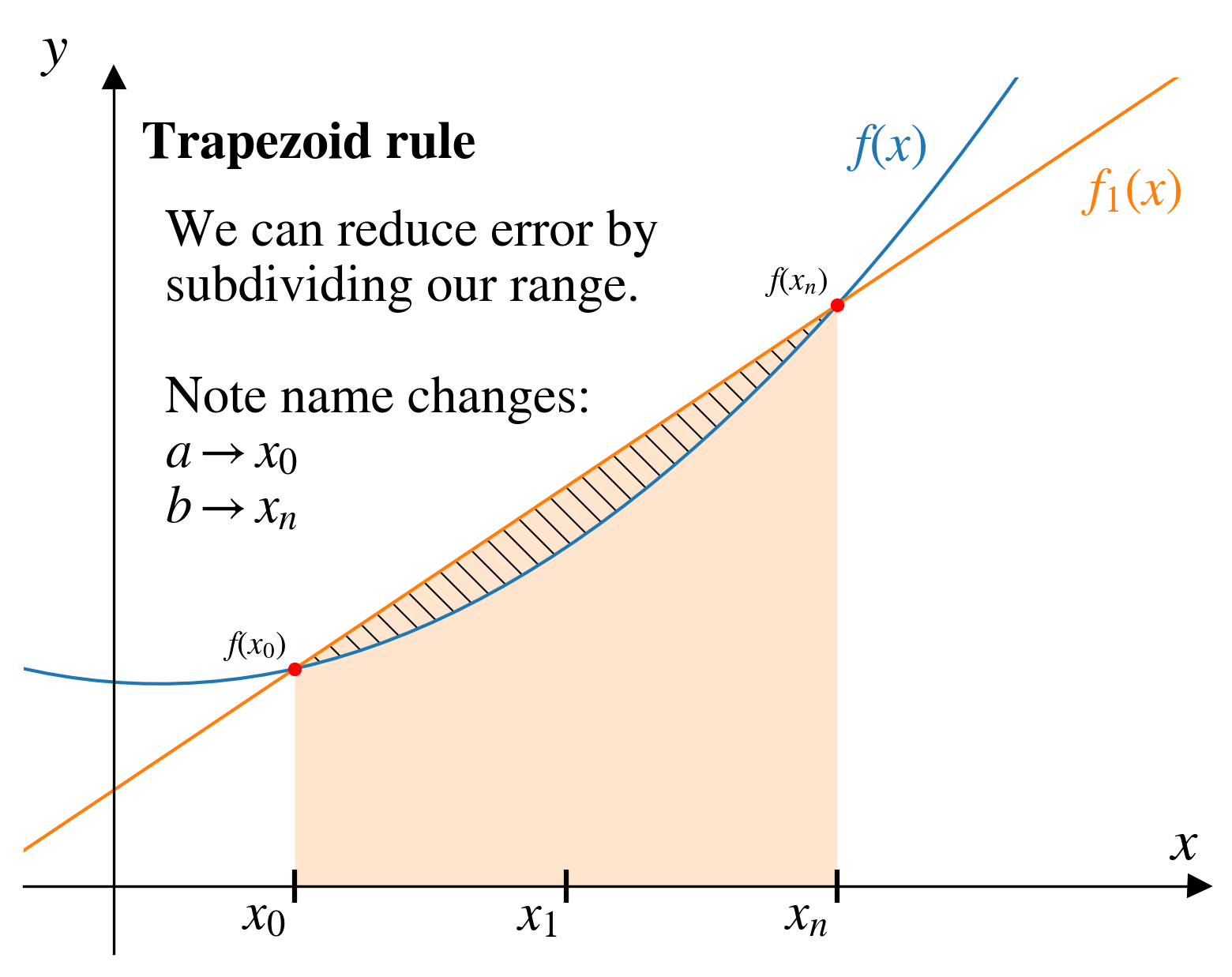
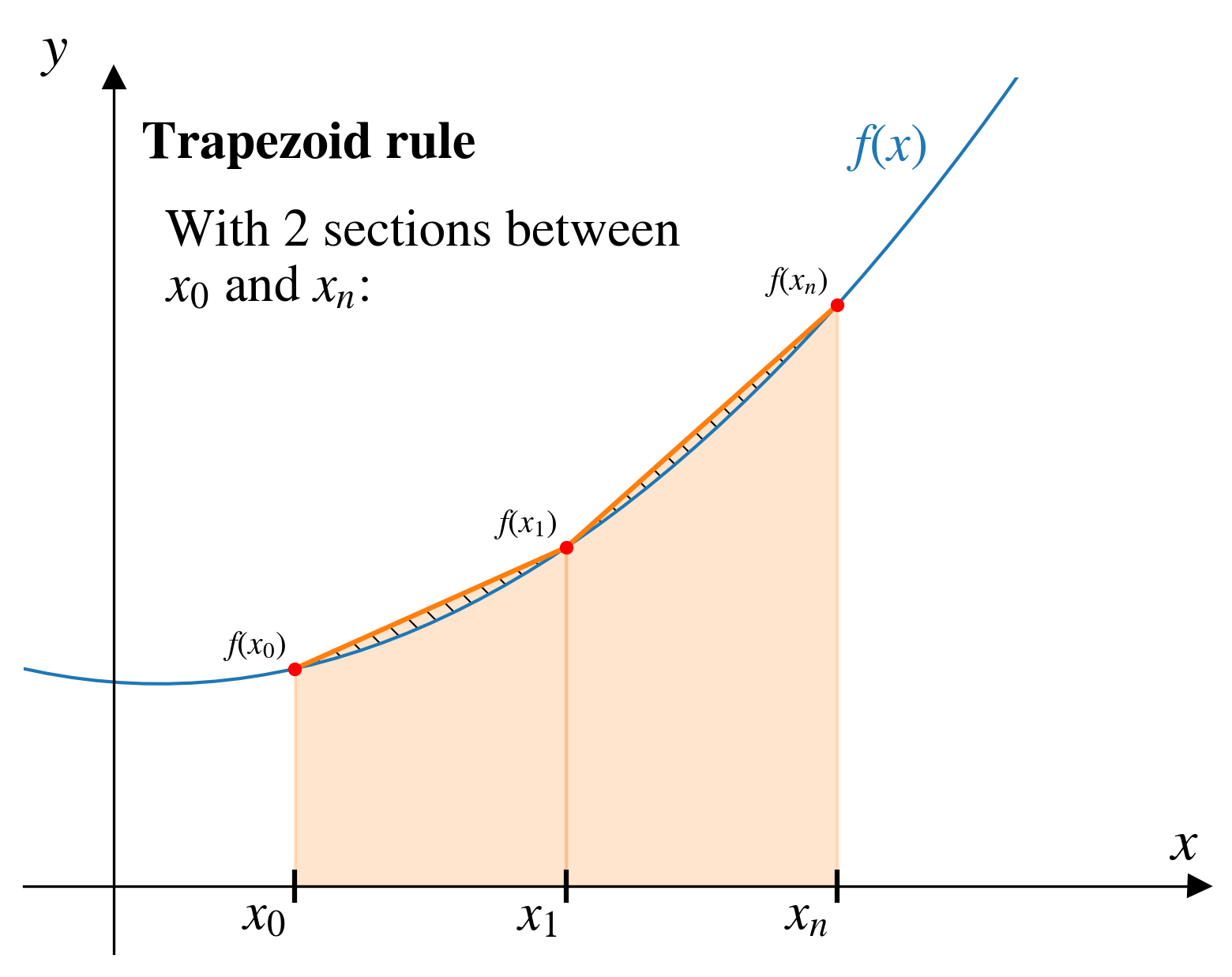
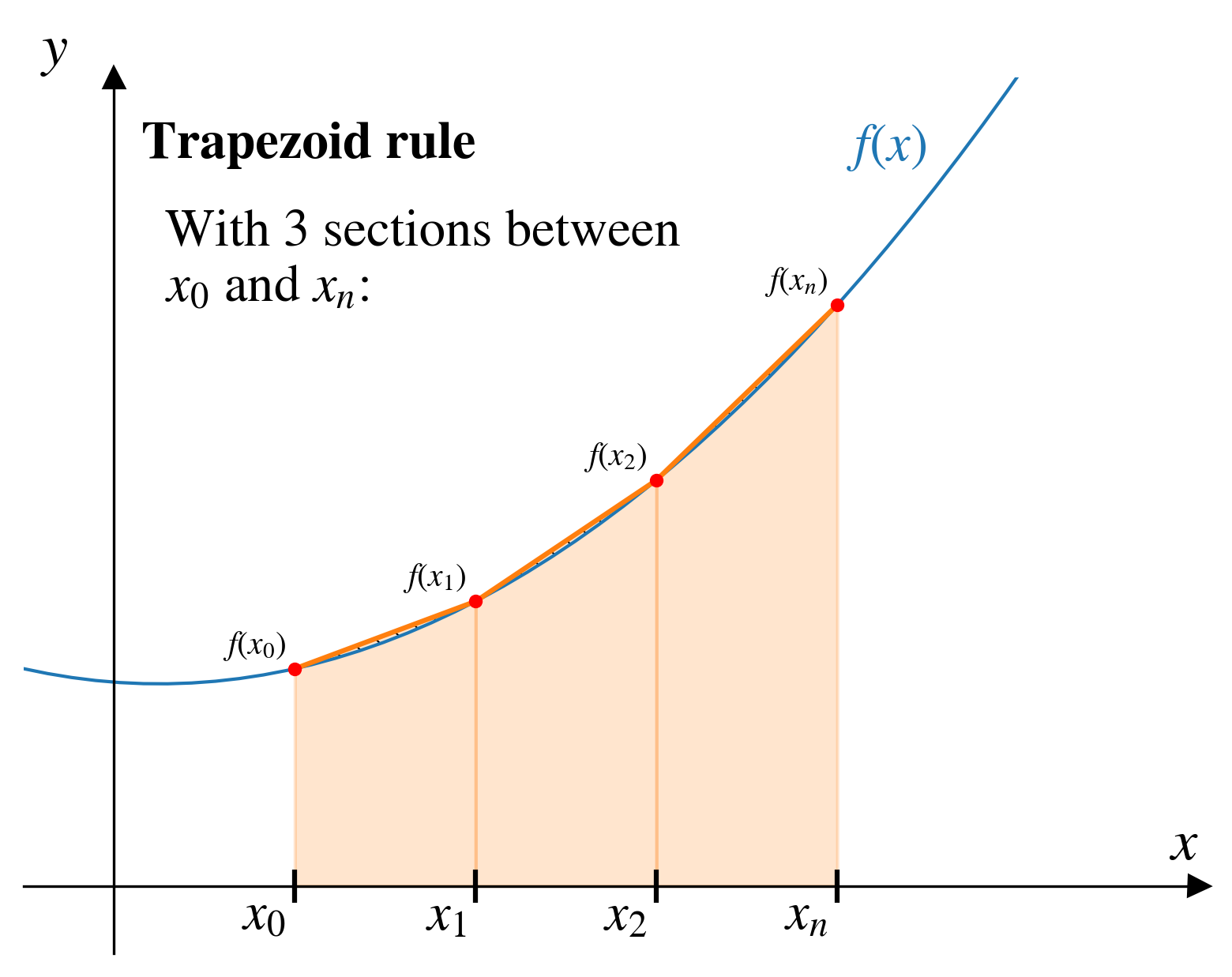
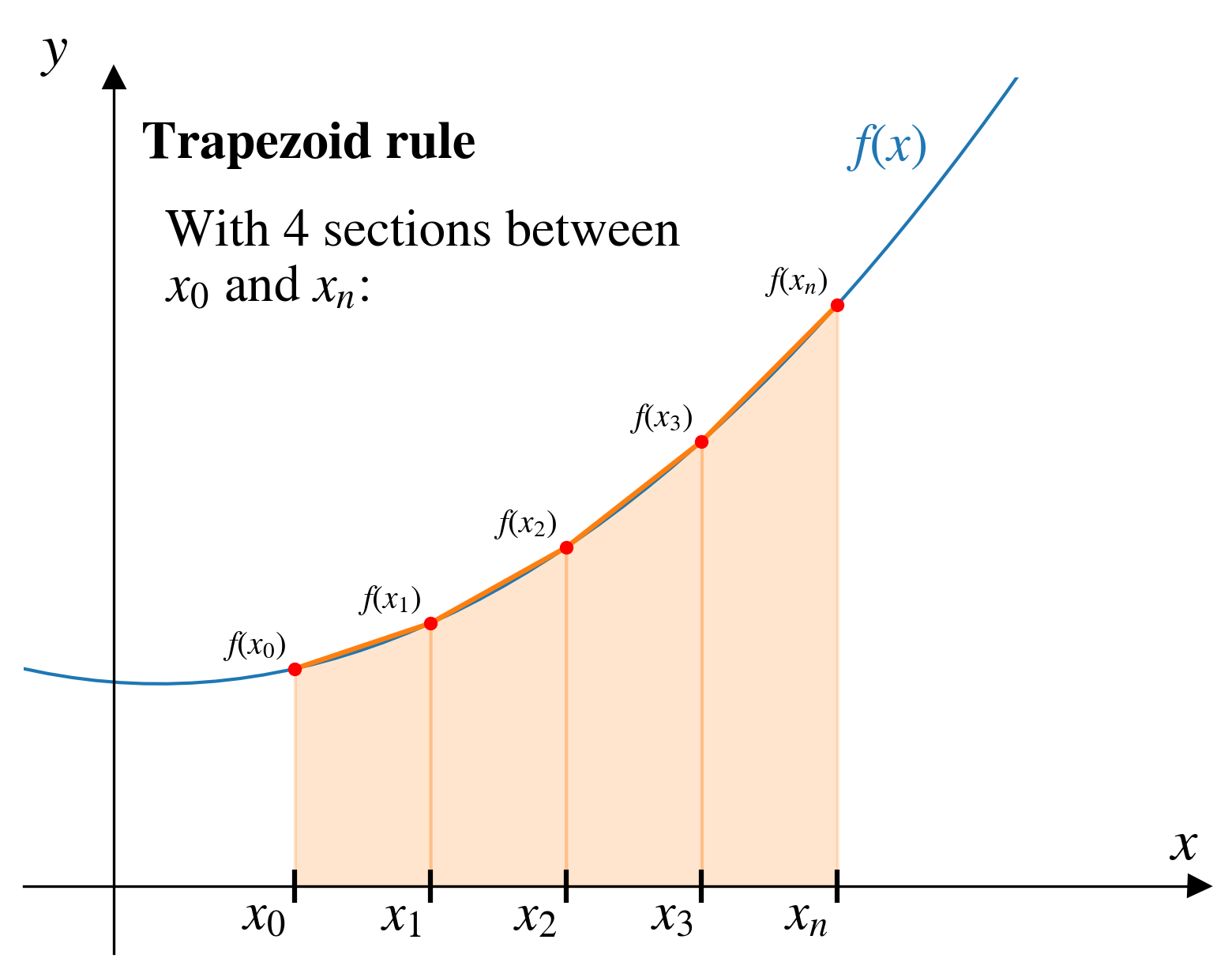
the effective height: \(\displaystyle \frac{f(a) + f(b)}{2}\)
Trapezoid rule
\(n-1\) again?
With \(n\) points, our approximate integral gives us \(n-1\) trapezoids…
Think of each trapezoid as areas corresponding to \(x_1\) through \(x_n\).
If we want \(n\) points for our integral, assign \(x_0 = 0\) and then add the integration constant, \(C\) to the entire integral array
Numerical integration in Scipy
Scipy has a function for discrete integration: scipy.integrate.cumulative_trapezoid
from scipy.integrate import cumulative_trapezoid as trapzdx =0.05x = np.arange(0,2*np.pi,dx)y = np.sin(x)I = trapz(y,x)print(f"Length of x: {len(x)}")print(f"Length of y: {len(y)}")print(f"Length of I: {len(I)}")
Length of x: 126
Length of y: 126
Length of I: 125
Numerical integration in Scipy
Scipy has a function for discrete integration: scipy.integrate.cumulative_trapezoid
from scipy.integrate import cumulative_trapezoid as trapzdx =0.05x = np.arange(0,2*np.pi,dx)y = np.sin(x)I = trapz(y,x,initial=0)print("The length of x, y, and I:")print(f"Length of x: {len(x)}")print(f"Length of y: {len(y)}")print(f"Length of I: {len(I)}")
The length of x, y, and I:
Length of x: 126
Length of y: 126
Length of I: 126
Numerical integration in Scipy
Scipy has a function for discrete integration: scipy.integrate.cumulative_trapezoid
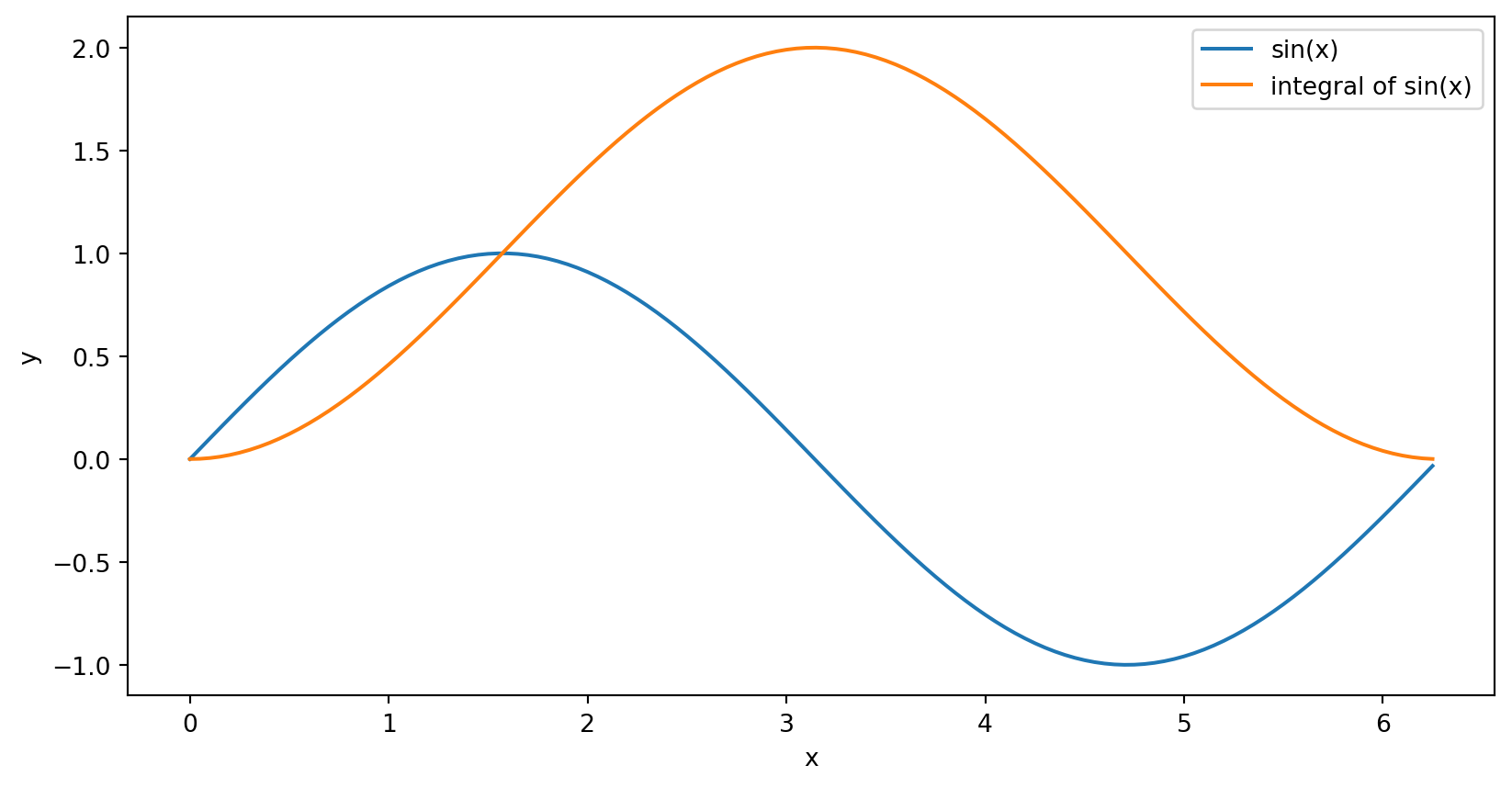
from scipy.integrate import cumulative_trapezoid as trapzdx =0.05x = np.arange(0,2*np.pi,dx)y = np.sin(x)I = trapz(y,x,initial=0)
Numerical integration in Scipy
Scipy has a function for discrete integration: scipy.integrate.cumulative_trapezoid
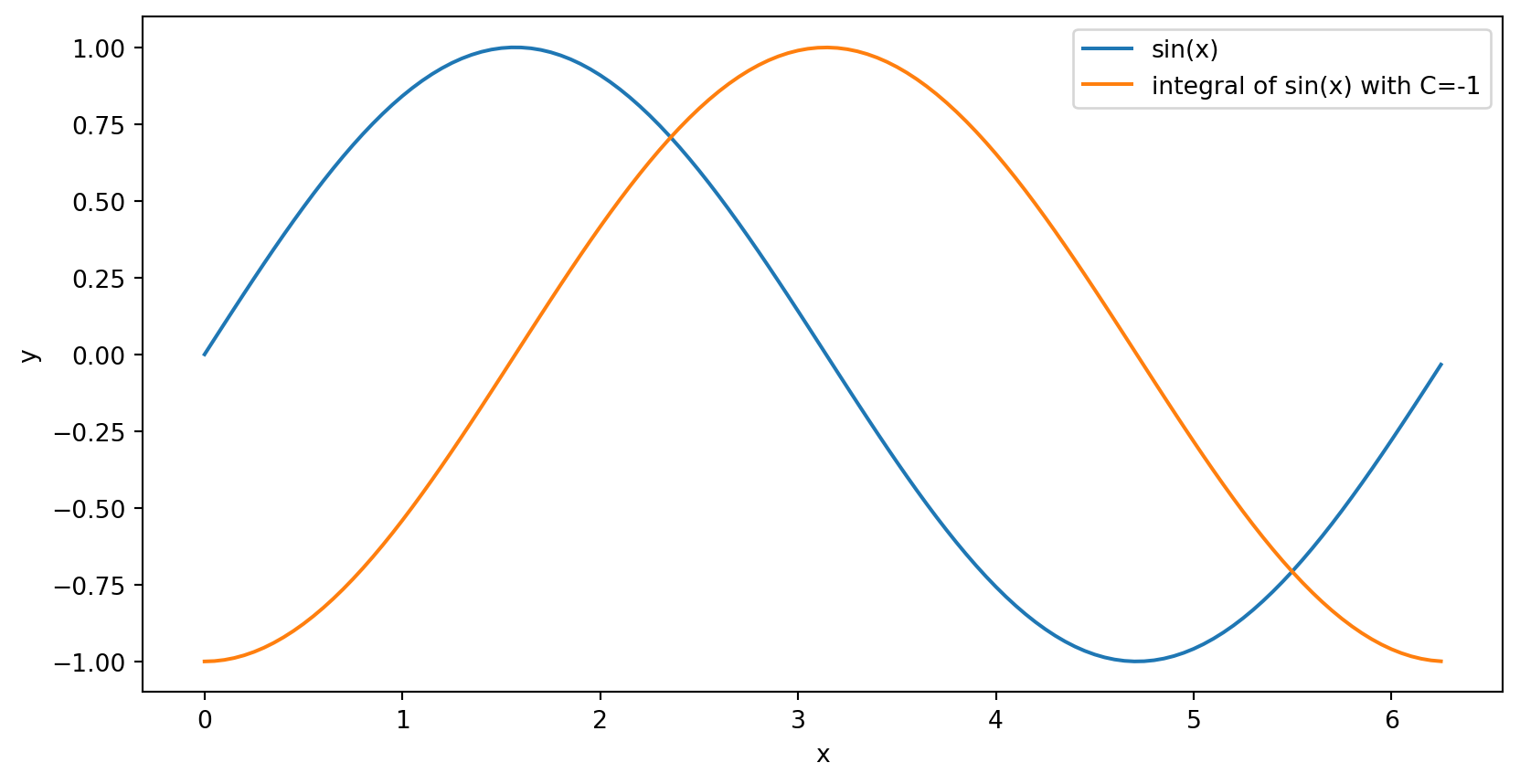
from scipy.integrate import cumulative_trapezoid as trapzdx =0.05x = np.arange(0,2*np.pi,dx)y = np.sin(x)C =-1I = trapz(y,x,initial=0) + C